How do you know a bubble is a bubble? You don’t. And that’s as true as the sun rising in the east and setting in the west. There are signs, and there are setups. But good luck making the last buck, and good luck timing when to put the short on. It’s a degree of difficulty that even Olympic athletes would have difficulty executing. This group from 1912 would have just as much random luck as those running fundamental long/short strategies today, or the 100 yard dash.

Source: Creative Common/The Bain Collection
As regular, and irregular readers know, I’m a recovering manager of hedge fund money. Which is different from the ‘I was a hedge fund manager’ flex. When I was on my game, I was a top decile, top 10% of the world short seller and the numbers backed it up. My career ended to a large degree due to the extinction of me and my people. We no longer mattered because the hedge only slowed down performance, and the fees attached. Truly a cemetery of talent.

Source: Creative Common & William Murphy
But let me give you a lesson from an old timer. One way to know there is exhaustion is to figure out when traders stop making money. They don’t have the magic ‘we’ve reached a top’ bell either. It pains me to show you a tell of the top tick that is technical in nature, but it is what it is as I like to say.
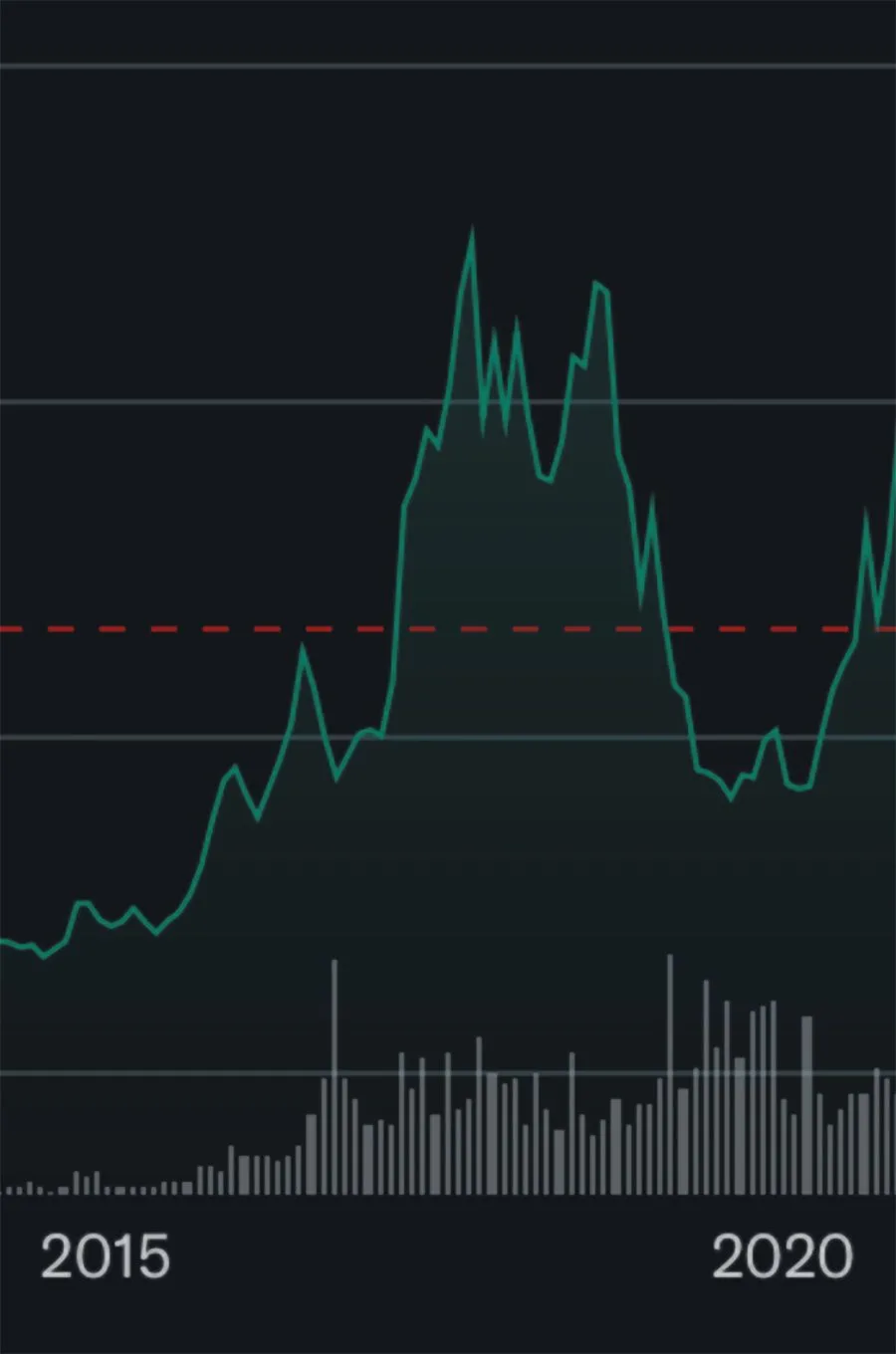
Technical trading being the art of reading stock charts. In this case it happens when there is either a double top, or a head and shoulders top. This is National Beverage, symbol FIZZ from 2015 to 2020. The company makes LaCroix and competition caught up with them. Don’t worry about the dollar piece, just know the stock got cut in half.
Source: Yahoo Finance.
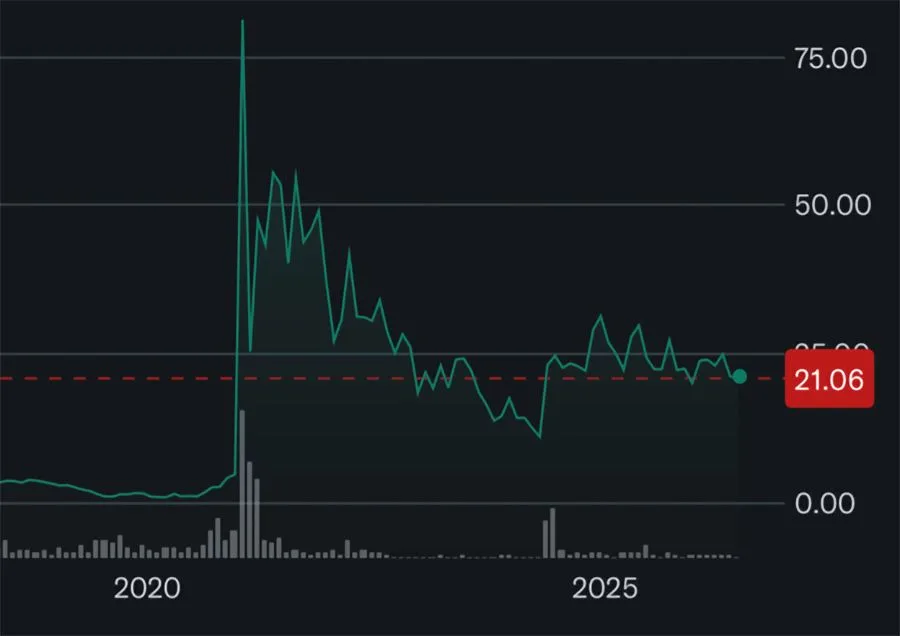
This one is a little different and is referred to as a ‘blowoff top’. The stock is the now famous GameStop that was part of the great meme renaissance of 2022. Every short seller, including this guy, had bet again this overly levered, light on revenue and cash flow company. It checked all the boxes. The only one that was reading as a red light was the size of the short position betting against GME. That was the curse for Melvin Capital. They stood against the short squeeze without risk controls in place and it cost them the company.
Source: Yahoo Finance.
Which brings us to today. In my very own and humbled by age experience, I believe we are in some form of a bubble. Is it early innings? Possibly, and that means there is a lot of money still to be made. Are we past the 7th or so? Could be as well. The hyperscalers need cash to buy all these chips. Can they keep burning
it at the rate they are? The answer is a definitive no. Once you burn through cash from operations, the debt market is your next source. It can only handle so much.
While that is the backdrop, and probably how this whole thing is going to play out, good luck trying to game it. Even really good short sellers like me were always early. By the time we got to making money, it was only getting old losses back to zero. To those who want to short the great AI fired chip renaissance of 2026, I wish you the best of luck. If you are looking for me in be in that graveyard I mentioned earlier with a pick and shovel.
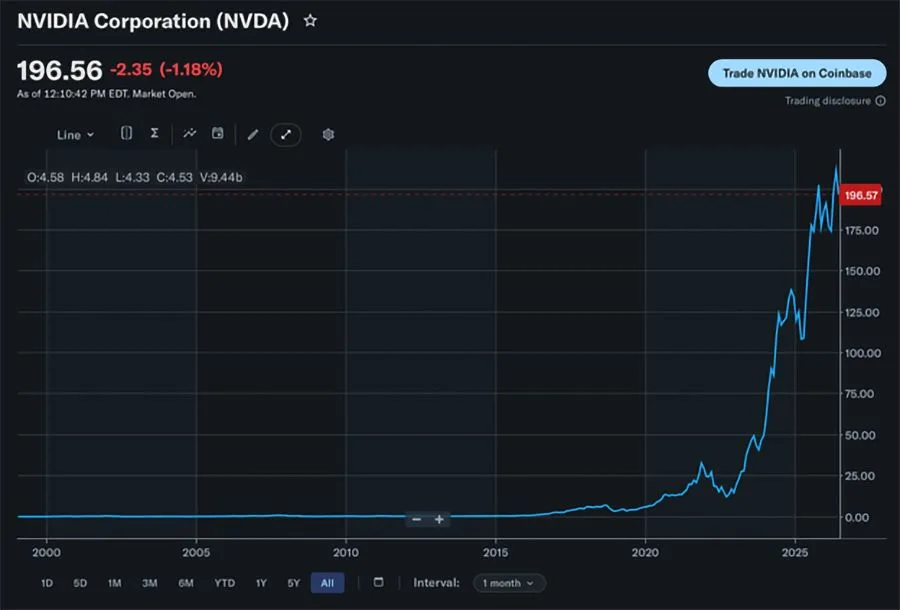
Ten years ago, a lifetime in markets, NVIDIA was trading at $0.30. Today it trades a few bucks shy of $200. You do the math…
Source: Yahoo Finance
Lecture 2 of 4 in this course of ‘Short 101’ is over and you all have been dismissed. Come back in a couple of months and we will pick it up again. Have fun out there, kids. If you still need to scratch that adolescent itch, go do it. Just remember the saying, ‘there are no crybabies in the casino’.

Source: Creative Common
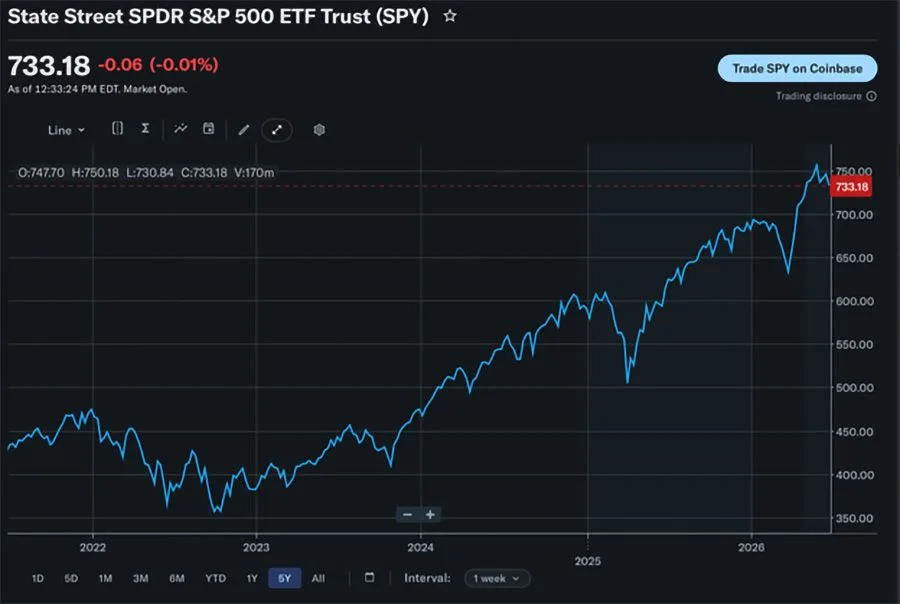
Deep breath now as this is going to get as serious as a heart attack in a minute. If you own assets, and all of you do, you are better off today than you were five years ago? Yes, you are. The market as defined by the S&P 500 SPY ETF has gone from roughly 450 to 750 during that time.
Source: Yahoo Finance
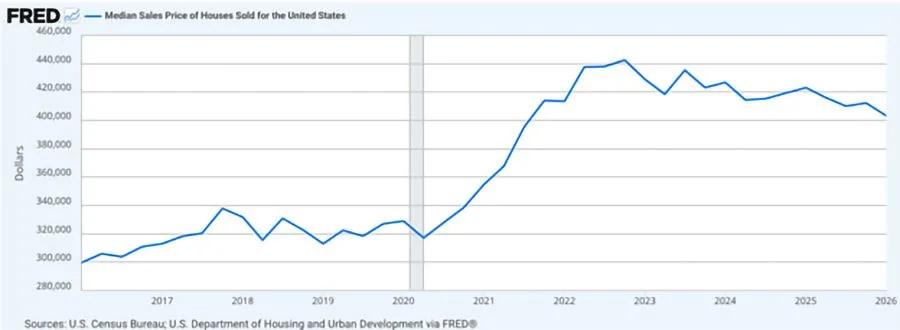
The median aggregate value in homes, not regional but across the United States went from $300,000 to the current $400,000. That’s down from a peak of $440,000. Take that to a hyper value market on the coasts, in Florida or Austin and suddenly you are talking real money.
If you are reading this you with almost a 100% guarantee have a financial advisor who you are working with that can help you manage these positive changes in your life. Those changes are probably happening at the right time in life and your life is looking out at sunrises over beautiful valleys welcoming the new day.

Source: Creative Common and Huang Photography
If you are feeling as ebullient as World Cup fans in the United States right about now, and don’t want a come down, pack this piece up and tune into the coverage.
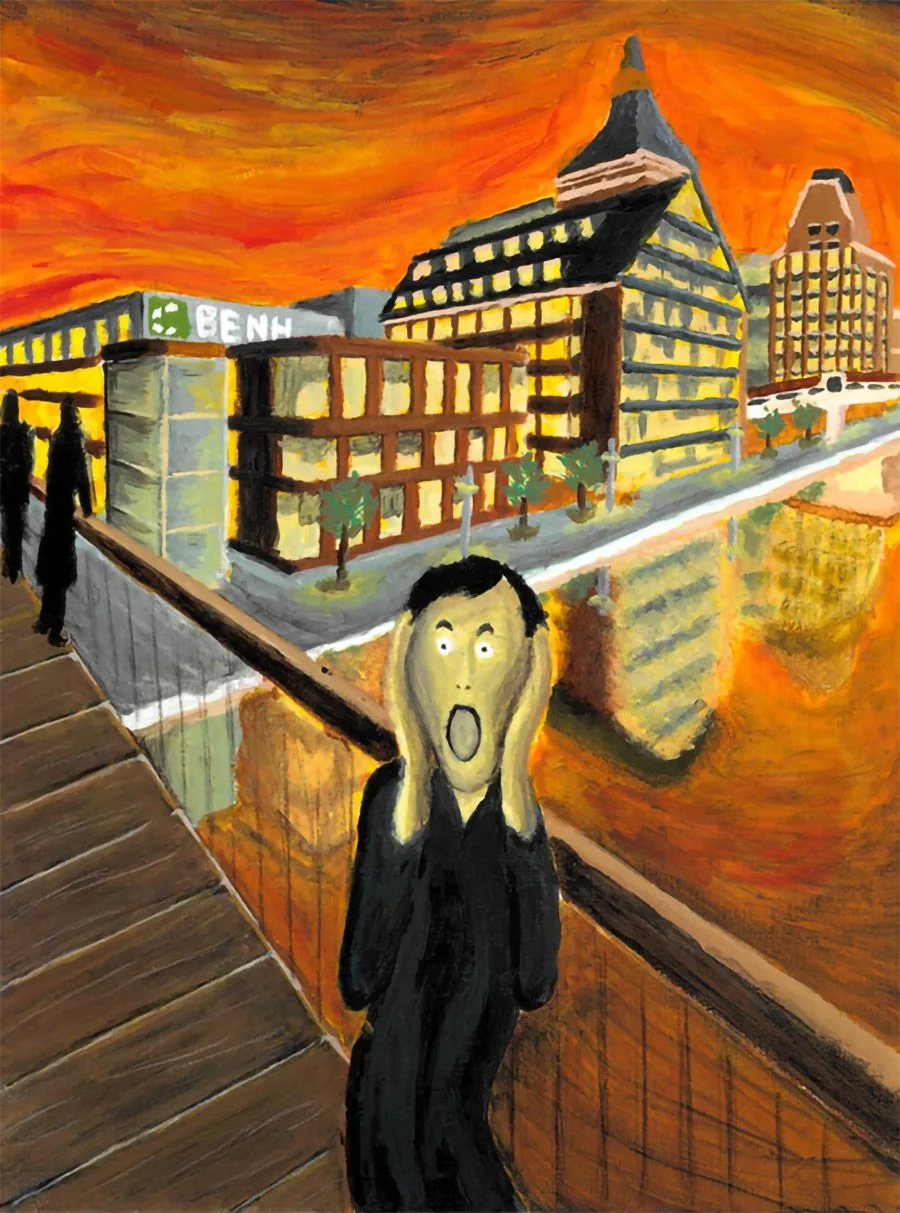
If you want to hear about the rest of story, read on. And yes, the image below shows that I have range when using my guy Edvard Munch’s Scream. It’s my go to when opening up Pandoras Box and all that it holds today. It will probably be so for a good long time. This one is classily illustrated in front of the BNP building.
Source: Free/blieusong
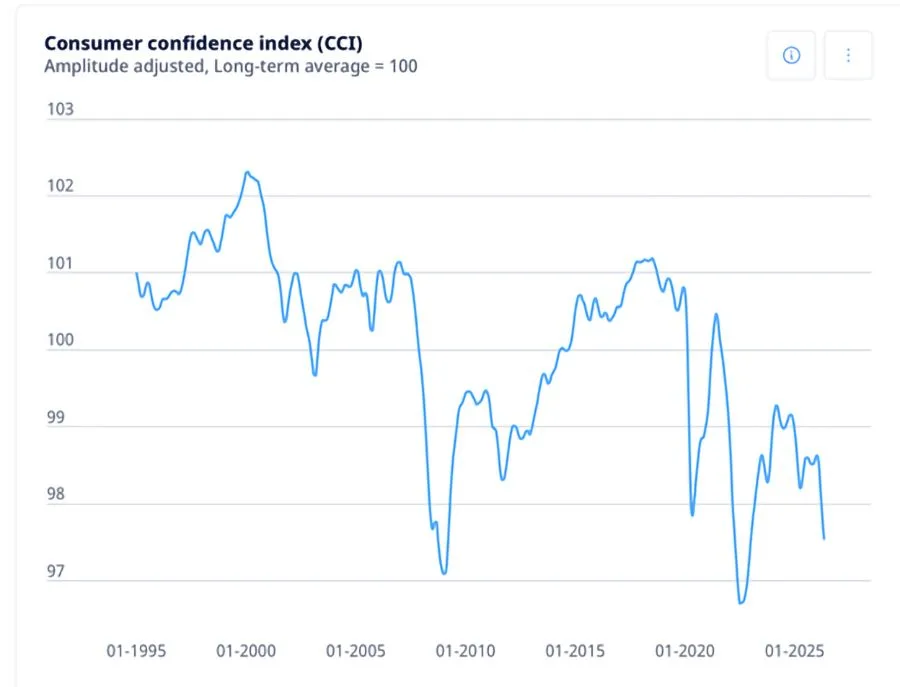
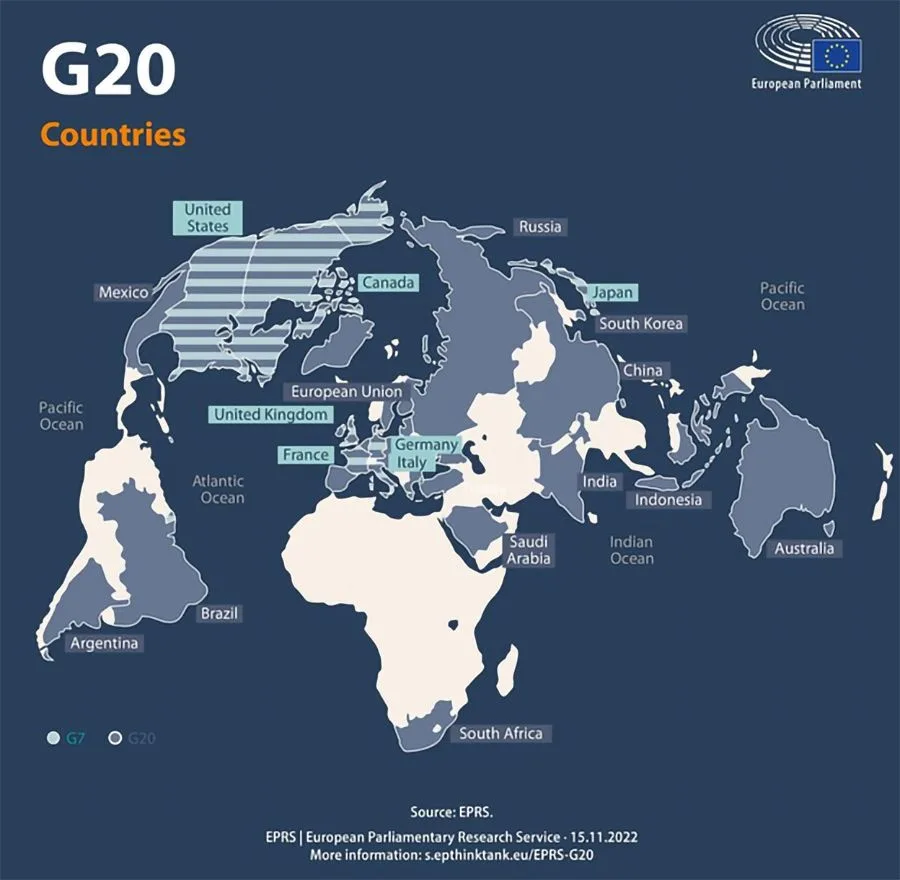
First up, global consumer confidence as reported by the Organization for Economic Co-operation and Development, sucks! That is a technical term for ‘not very good’. If this chart is right, and I have no reason to believe it’s not, we are about half a point away from 97. That’s the low for the Global Financial Crisis and the aftermath of the Covid Pandemic. This is a measure globally and includes input from the G7 and G20 countries,
Source: Organization for Economic Co-operation and Development
We haven’t even hit a recession or external shock and already we are at those low levels of confidence. “You can of course have your personal opinions about his character and style, but it is my opinion that the global tariff club that Donald Trump has been using does not instill confidence in how the world looks at us or wants to trade. I believe they don’t feel safe, liked, or appreciated by the United States right now. It adds up. It simply does.”
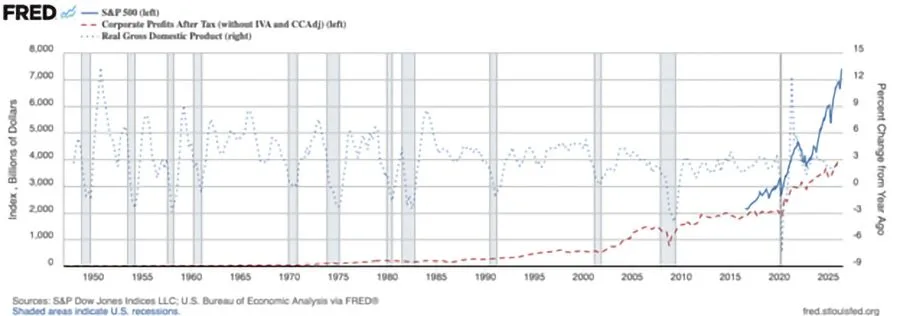
Another one I have that goes in the ‘I’ve got a bad feeling about this’ column is from the St. Louis Federal Reserve and shows the relationship between GDP growth, after tax earnings growth, and the S&P 500. This is a new one from FRED, and if I could date it I would. It’s that beautiful.
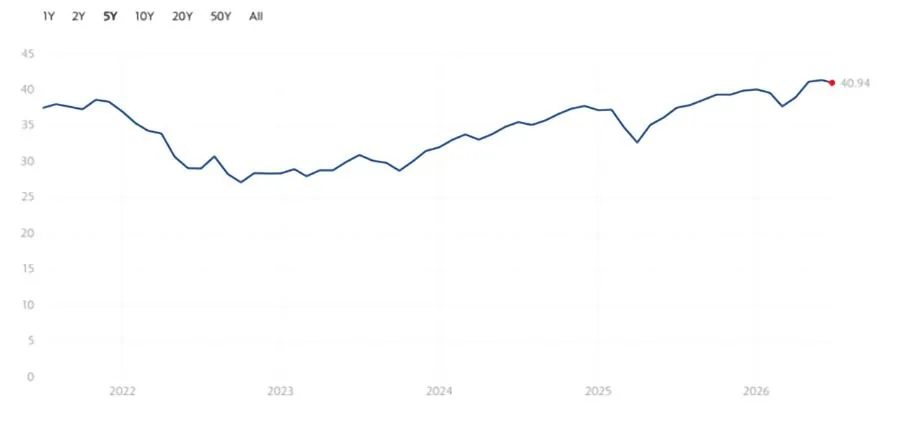
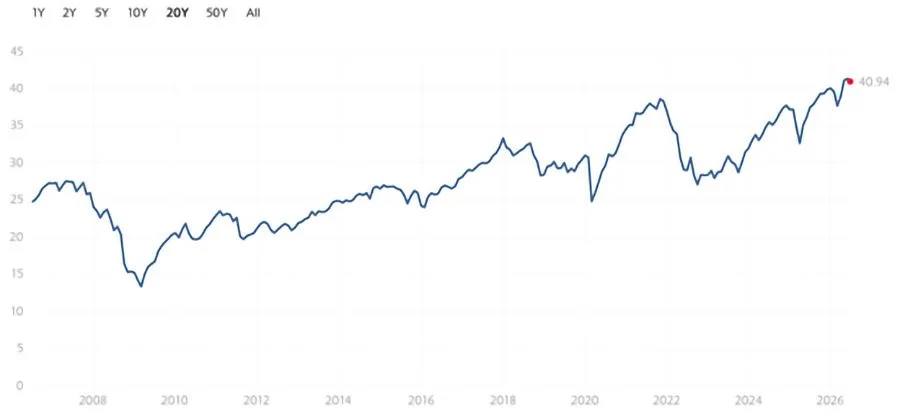
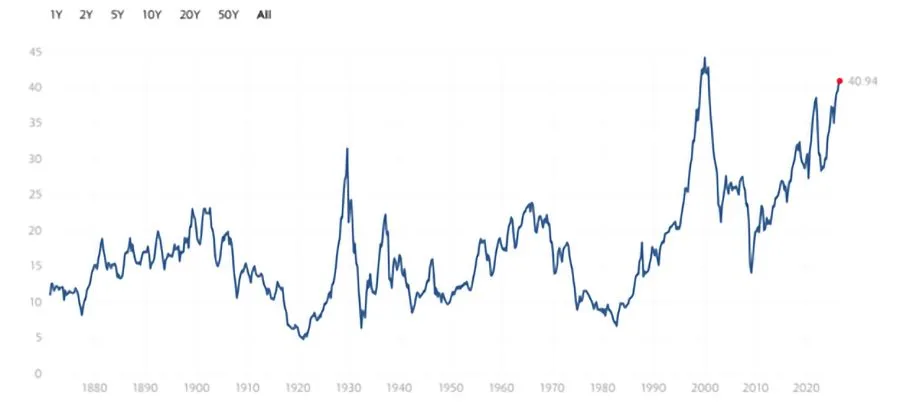
Similar subject, valuation. And here is where you get not just a blinking yellow, this is solid red. We are within about 7% of the all-time price to earnings high on valuation of the S&P 500. This is using the respected Case/Schiller ratio.
Using five years as the time frame, we are about 15% above average.
Expand that out to twenty years and it’s 25% above average.
Source: Case-Shiller Indexes
Zoom way way back to 1870 and it’s anywhere between 40% and 50% above average depending on what you consider average. Keep in mind, that is a 150 year data set with plenty of signal inside.
And while I don’t watch much in the way of CNBC anymore, I’m quite sure there is a weekly flogging of the fact that we are within about 10% of an all time high in valuations. The high being a 45x multiple at the top of the dot.com blowoff.
Source: Case-Shiller Indexes
Last chart to make you think, nay squirm, is that of debt compared to GDP. The United States has on the books a little over $39 trillion in debt, with a gross domestic product of $31 trillion. Why? I believe because the hawks that were on watch for massive deficits have all died or changed their tune to keep their jobs. Biden, and everyone else in power at the time, took the covid ‘crisis’ and followed the playbook. And that is to never let one go to waste.
Eyeballing it, we were at 40% from 1960 to 1990. Then stepped up to 60% from 1990 to 2010. Around the latter time the global financial crisis hit, and we blew it out to 100% in short order. Covid comes along and we blow out the number by another 20%. Notice that about only once during this long data series has debt as a percentage of GDP gone down.
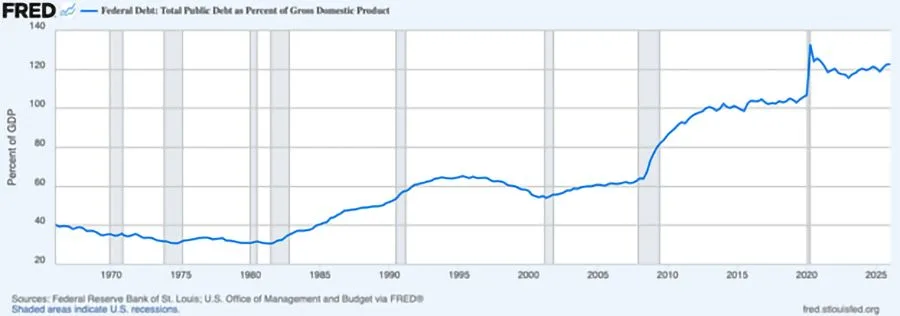
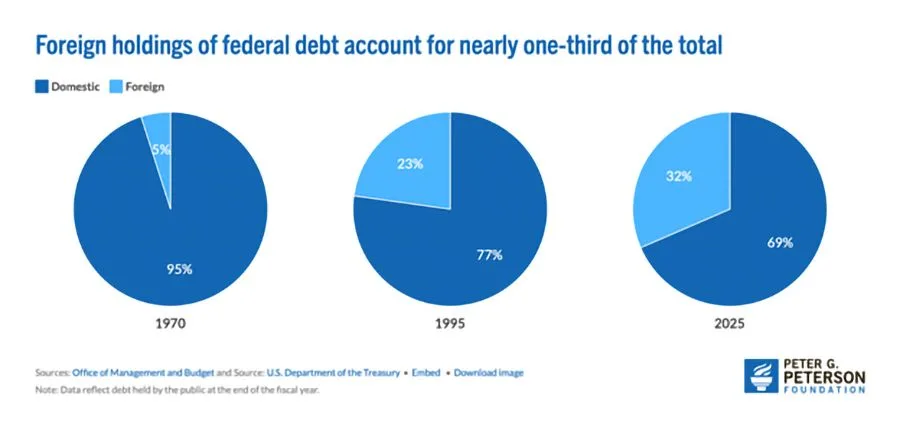
Why do we care? Because at some point the owners of our debt might go to sell. The biggest owner is us in the form of the Federal Reserve. Maybe someday it needs to back off the throttle and de-lever. That remains to be seen.
More interestingly, foreigners now own about 30% of what we offer. That’s all fine and good until they go to sell. Which has always been the threat, but it’s a nuclear one only to be sued when you want to create mass destruction.
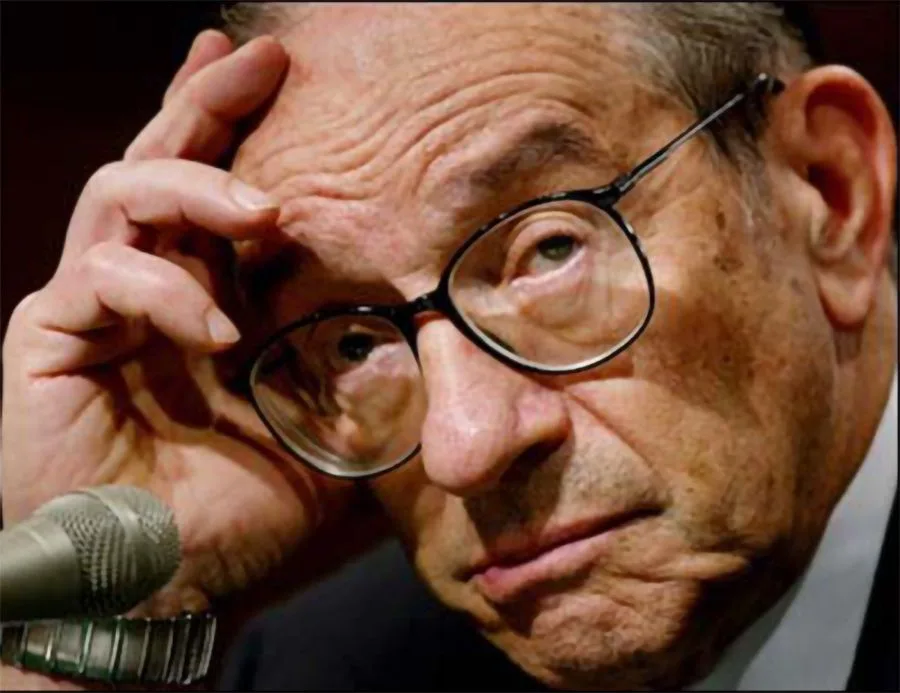
Wall Street and the Federal Reserve lost a legend this week when former Fed Chairman Alan Greenspan passed away at the tender age of 100. For those of us in our 50s or 60s he was the first central banker we knew. His term followed the irrepressible Paul Volker. It was an era when we hung on every word of what he said. The biggest ones being those he said on December 5th, 1998. They were the core of his famous ‘irrational experience’ speech….
“Clearly, sustained low inflation implies less uncertainty about the future, and lower risk premiums imply higher prices of stocks and other earning assets. We can see that in the inverse relationship exhibited by price/earnings ratios and the rate of inflation in the past. But how do we know when irrational exuberance has unduly escalated asset values, which then become subject to unexpected and prolonged contractions as they have in Japan over the past decade?”
Javier
Source: Flikr Free/Javier
What I meant at the time, at least to us running real money, was that stocks were overvalued, and the Federal Reserve saw it. This is incredibly rare as in general central bankers don’t make valuation calls. The dot.com bubble would not each it’s nadir for another 18 months or so. While he didn’t hit the top tick, Greenspan was ‘directionally accurate’.
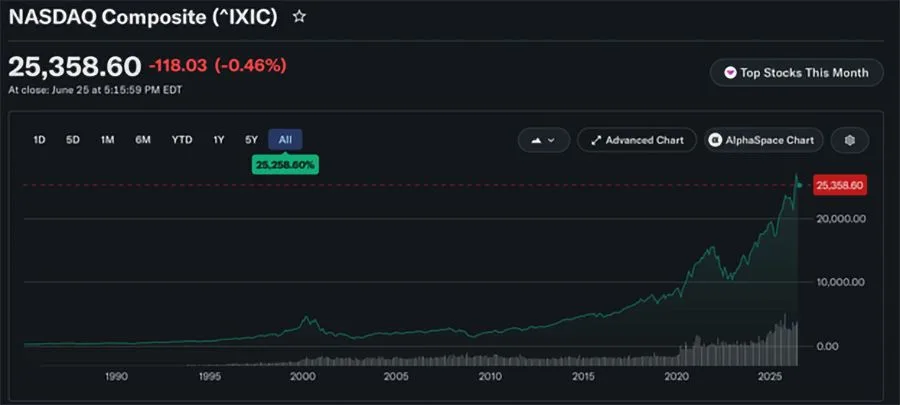
This is the chart of the NASDAQ, which has always been referred to as ‘tech heavy’ largely because it is. The period of time we are talking about is the seemingly anomalous bump in the chart circa 2000. It would take 15 years for the index to see a new high.
When the Federal Reserve backstopped the financial system in face of the uncertainty of Covid, it rocketed higher by 50%. Only to give back those gains. But since the low of roughly 10,000 in 2022 it has been nothing shy of a untethered
rocket, rising 150% to the current high just north of 25,000 fueled by the AI inspired Gold Rush.
Does this seeming bubble burst at some point? Possibly. Does it do it from here or 10,000 points higher? Who knows. But the speculation may be thick from here on out. Looking for early proof, look back at the chart shown earlier of NVDA.
I’ve gone on probably too long about this time in markets. But I don’t want it minimized that this was the era when the Greenspan Put, later to be called the Fed Put came to be. It was the idea the no matter what, your losses were guaranteed to go away as long as you stayed in the trade. And this has been the case ever since. As has become it’s mantra, nearly codified in its practices, the Federal Reserve of the United States is no longer in the business of calling bubbles. It’s there to pick up the pieces when they blow up and has been for going on 45 years.
At some point soon, I think the ‘put’ should be challenged”
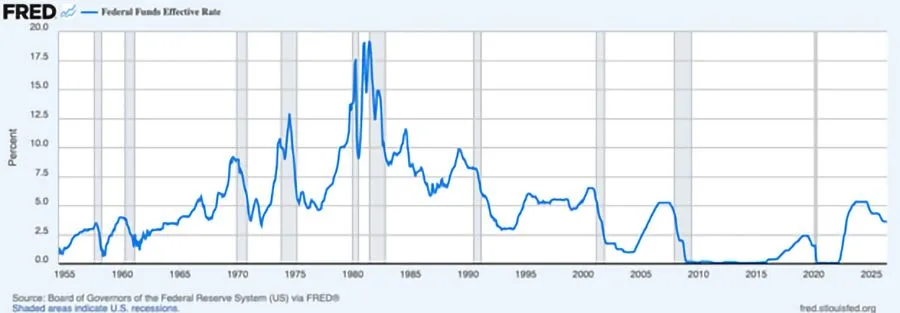
Is this time different with the bubble popping the other way and long term inflation likely on an upward trend not seen since the late 1970s? These old eyes see that as a yes, and the markets are starting to see it as well. The tale of two economies can’t go on forever. To narrow the gap between the top decile that have everything, and the rest of us schmoes who are week to week, I believe it may require asset prices to normalize at lower level At some point soon the ‘put’ should be challenged. Let markets be markets again. Pull the safety net and let something fail. It sucks to hear that, but it’s might be the right medicine to take. But next week, the medicine I plan to take comes in a 12 ounce can and will be served frosty cold. God bless America, and hold my beer.
Source:mtpl